
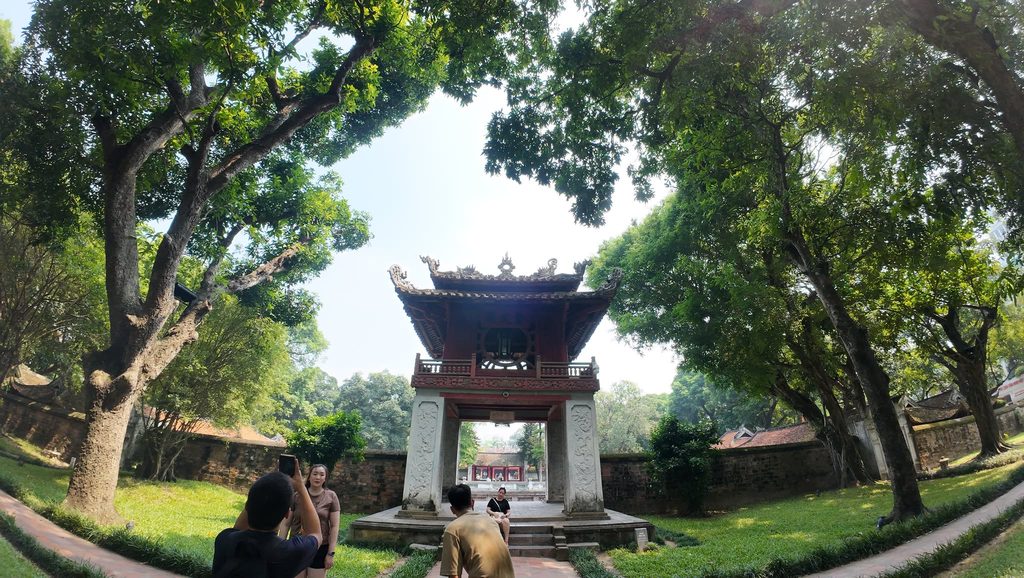
The Temple Of Literature
Văn Miếu Quốc Tử Giám, or the Temple of Literature, is one of the most interesting cultural sites to visit in Hanoi. Located close to the city centre, it offers visitors a chance to see traditional Vietnamese architecture, ancient courtyards, stone steles, and one of the country’s most important places of learning.
For first-time visitors, the site is relatively easy to explore and can usually be visited in around 30 minutes. It is particularly suitable for travellers interested in Vietnamese history, education, architecture, and traditional culture.
It can also be a convenient stop during a Hanoi city tour because several other major attractions are nearby.
Overview
The Temple of Literature was established in 1070 under the Lý Dynasty and was later associated with Quốc Tử Giám, traditionally regarded as Vietnam’s first national university.
The complex is divided into several courtyards, connected by gates and traditional architectural features. One of its best-known areas contains stone steles mounted on the backs of stone turtles. These steles record the names of successful candidates from royal examinations held over several centuries.
Today, Văn Miếu Quốc Tử Giám is both a historical monument and a popular cultural attraction in Hanoi.
The site is not extremely large, so you do not need an entire day to visit it. Allowing about 30 minutes is generally enough for a comfortable visit, although visitors who enjoy photography or want to explore at a slower pace may want more time.
How to Get There
Văn Miếu Quốc Tử Giám is located in central Hanoi, making it relatively easy to reach from many parts of the city.
By taxi or ride-hailing app
For independent travellers, a taxi or ride-hailing service is one of the easiest options. You can enter “Văn Miếu Quốc Tử Giám” as your destination.
Travel time depends heavily on traffic. From the Old Quarter, the journey can often take around 10–20 minutes, but it may take longer during busy periods.
By walking
If you are staying around the Old Quarter, walking to the Temple of Literature is possible, but it is not particularly close. Depending on your starting point, the walk may take around 30–45 minutes.
Walking can be worthwhile if you want to experience more of Hanoi’s streets along the way, but keep the weather in mind, especially during the hot and humid months.
As part of a day tour
Văn Miếu Quốc Tử Giám is also commonly included in Hanoi city tours. This can be a practical option if you want transportation and several attractions arranged in one itinerary.
What to See
The traditional gates and courtyards
The entrance and successive courtyards give you an introduction to the layout of the complex. Take your time walking through the different sections rather than treating the site as a single monument.
The architecture is relatively simple compared with some of Vietnam’s larger imperial monuments, but the combination of gates, gardens, ponds, trees, and traditional buildings creates a peaceful atmosphere in the middle of Hanoi.
The stone steles
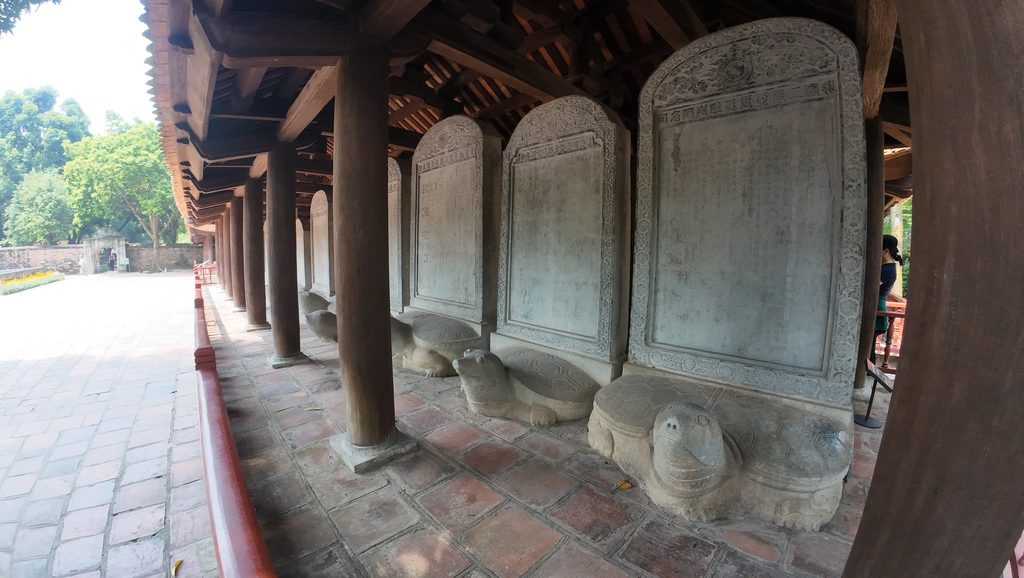
One of the most distinctive features of the Temple of Literature is the collection of stone steles mounted on turtle-shaped stone bases.
The steles commemorate successful candidates from the royal examinations. They are an important reminder of how education and academic achievement were valued in traditional Vietnamese society.
The area is also one of the most photographed parts of the complex.
Khuê Văn Các
Khuê Văn Các, or the Constellation of Literature Pavilion, is probably the most recognizable structure at the Temple of Literature.
The small pavilion has become a symbol associated with Văn Miếu Quốc Tử Giám and is a popular photography spot.
The main temple area
Further inside the complex, you will find the main ceremonial and worship areas. These buildings provide a closer look at traditional Vietnamese architectural details and the historical connection between education, Confucianism, and Vietnamese society.
Visitors should remember that this is a cultural and religious heritage site, so respectful behaviour is appropriate.
Before You Visit
Allow enough time
For most visitors, 30 minutes is a reasonable amount of time.
If you are visiting as part of a larger Hanoi itinerary, this makes the Temple of Literature relatively easy to combine with other attractions.
Wear comfortable clothes
You will be walking through several courtyards and outdoor areas. Comfortable shoes are recommended.
Hanoi can also be very hot and humid, particularly during the summer, so lightweight clothing and sun protection can make the visit more comfortable.
Dress respectfully
Although this is a tourist attraction, it is also a historical and cultural site.
Avoid extremely revealing clothing, particularly when entering areas associated with worship. Wearing something that covers the shoulders and knees is a sensible choice.
Visit earlier if possible
The site can become busier later in the day, particularly during weekends and peak tourist periods.
An earlier visit can provide a more comfortable experience and better conditions for photography.
Bring water
There can be considerable walking and exposure to the sun, depending on the season. Carrying a bottle of water is useful, especially during warmer months.
Photography
Photography is generally an important part of the experience, but visitors should be mindful of other people and avoid disturbing worshippers or ongoing ceremonies.
A Guide’s Personal Experience.
During one of my visits to the Temple of Literature, I noticed a group of Vietnamese students coming to take photos. They were dressed up nicely and wearing traditional Vietnamese hats. Some of them also lit incense and prayed for good luck and success in their upcoming examinations.
Mobile Data & eSIM
Having mobile data in Hanoi makes independent travel much easier.
You can use your phone for navigation, ride-hailing apps, translation, checking opening information, and finding restaurants or other attractions after your visit.
For international visitors, an eSIM can be a convenient alternative to buying a physical SIM card after arriving in Vietnam. You can install it before your trip and activate your mobile data when you arrive.
Check Vietnam eSIM options before your trip.
When choosing an eSIM, check the coverage period, amount of data, supported network, and whether hotspot usage is included. For a short trip, a smaller data package may be enough if you mainly use Wi-Fi at your hotel.
If you prefer to have mobile data ready when you land in Vietnam, you can check available Vietnam eSIM plans here.
Conclusion
Văn Miếu Quốc Tử Giám is worth considering if you want to experience a different side of Hanoi beyond its busy streets, cafés, and modern city life.
The complex is easy to include in a Hanoi itinerary, does not require a full day, and combines traditional architecture, Vietnamese educational history, and a relatively peaceful atmosphere.
For first-time visitors, 30 minutes is usually enough to explore the main areas without rushing. If you are interested in Vietnamese culture and want to understand more about the country’s traditional approach to education and scholarship, it is a worthwhile stop during your time in Hanoi.