
Bai Dinh Pagoda: A Practical Guide for First-Time Visitors
Bai Dinh Pagoda is one of the largest Buddhist temple complexes in Vietnam, located in Ninh Binh Province, about 95 km south of Hanoi. It is part of the Trang An Scenic Landscape Complex, a UNESCO World Heritage Site.
For international visitors, Bai Dinh is interesting for two very different reasons. The newer complex is enormous, with large Buddhist halls, impressive bronze statues, long corridors and hundreds of Arhat statues. At the same time, the original Bai Dinh Pagoda is an older, smaller temple area built around the mountain and caves.
If you enjoy architecture, Buddhism, photography and large cultural sites, Bai Dinh is worth considering. However, it is not a quick attraction. The complex is spread over a large area, and visiting it involves quite a lot of walking.
If you are planning a day trip from Hanoi or Ninh Binh, Bai Dinh works particularly well when combined with another destination such as Trang An or Hoa Lu.
Overview
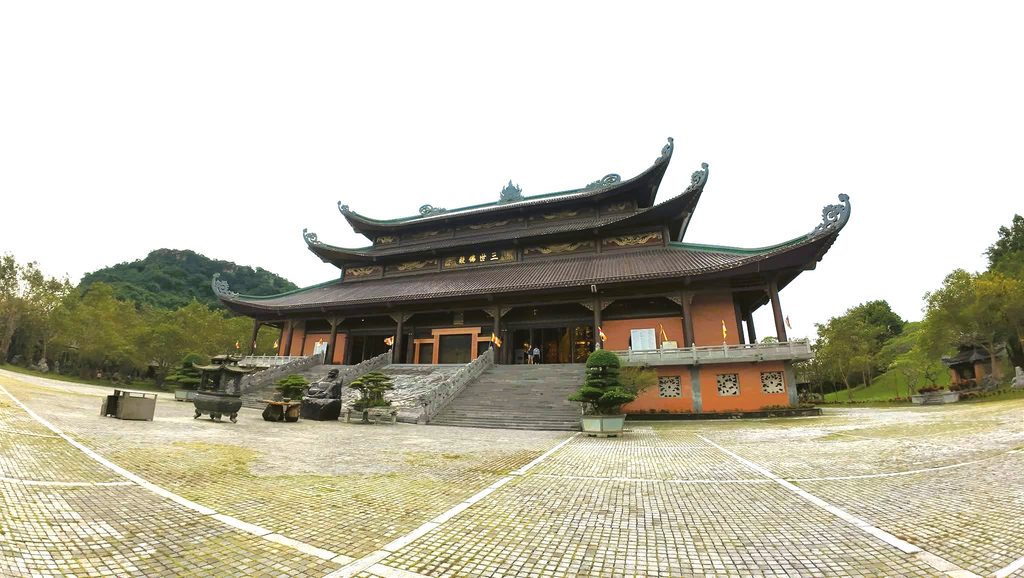
One important thing to understand before visiting Bai Dinh is that the name refers to a large complex containing both an ancient pagoda and a much newer temple complex.
The modern Bai Dinh complex was developed from 2003 and contains the impressive buildings and monumental Buddhist statues that appear in most photographs of the site. The older Bai Dinh Pagoda is located on the mountain nearby and has a much more intimate atmosphere.
The modern complex is famous for several large-scale features, including:
- A 10-metre-high, 100-tonne bronze statue of Shakyamuni Buddha.
- A 36-tonne bronze bell in the Bell Tower.
- Hundreds of Arhat statues along long covered corridors.
- Large Buddhist temples dedicated to different Buddhas and Bodhisattvas.
- Bao Thap, the tall stupa overlooking the complex.
- The ancient pagoda and caves on Bai Dinh Mountain.
The scale is probably the first thing you will notice. Bai Dinh feels less like a single temple and more like an entire Buddhist architectural landscape.
Is Bai Dinh Pagoda worth visiting?
It depends on what you expect.
Bai Dinh is a good choice if you want:
- impressive Buddhist architecture
- large statues and monuments
- Vietnamese religious culture
- photography
- a combination of mountains and architecture
- a destination that can be combined with other Ninh Binh attractions
It may not be the best choice if you want:
- a small, quiet traditional temple
- a short sightseeing stop
- a destination with very little walking
- an untouched ancient religious site
The distinction between the old and new sections is important. If you only visit the monumental modern complex, you may miss the older and more intimate side of Bai Dinh.
How to Get There
From Hanoi
Bai Dinh is approximately 95 km from Hanoi. By car, the journey normally takes around 1.5–2 hours depending on traffic and your starting point.
For first-time visitors, the easiest options are:
Join a day tour from Hanoi
This is convenient if you want to combine Bai Dinh with Trang An, Hoa Lu or another Ninh Binh attraction. Transport, a guide and the day’s itinerary are normally arranged for you.
Private car
A private car gives you more flexibility, especially if you want to spend more time at the pagoda or visit the ancient section.
Limousine or bus
You can also travel independently from Hanoi to Ninh Binh and then continue to Bai Dinh by local transport or taxi. This can be cheaper, but it requires more planning.
From Ninh Binh
Bai Dinh is around 15 km from Ninh Binh city.
A taxi, private car or motorbike is usually the simplest way to reach the complex.
If you are already staying in Tam Coc or Trang An, Bai Dinh can also be included in a wider Ninh Binh itinerary.
What to See
The Three-Entrance Gate
The large entrance gate gives you an immediate impression of the scale of Bai Dinh.
From here, the main route leads into the modern temple complex and towards the long corridors and major Buddhist halls.
The 500 Arhat Statues
One of the most memorable parts of Bai Dinh is the long corridor lined with 500 stone Arhat statues.
Each statue has a different expression and posture, so it is worth slowing down rather than simply walking past them. The corridor is one of the features for which Bai Dinh is particularly well known.
For visitors interested in photography, this is also one of the best places to look for details in the stonework.
The Bell Tower
The Bell Tower contains a huge bronze bell weighing 36 tonnes, officially recognised as Vietnam’s largest bronze bell.
The tower itself is also worth seeing because of its traditional Vietnamese architectural style.
Phap Chu Hall
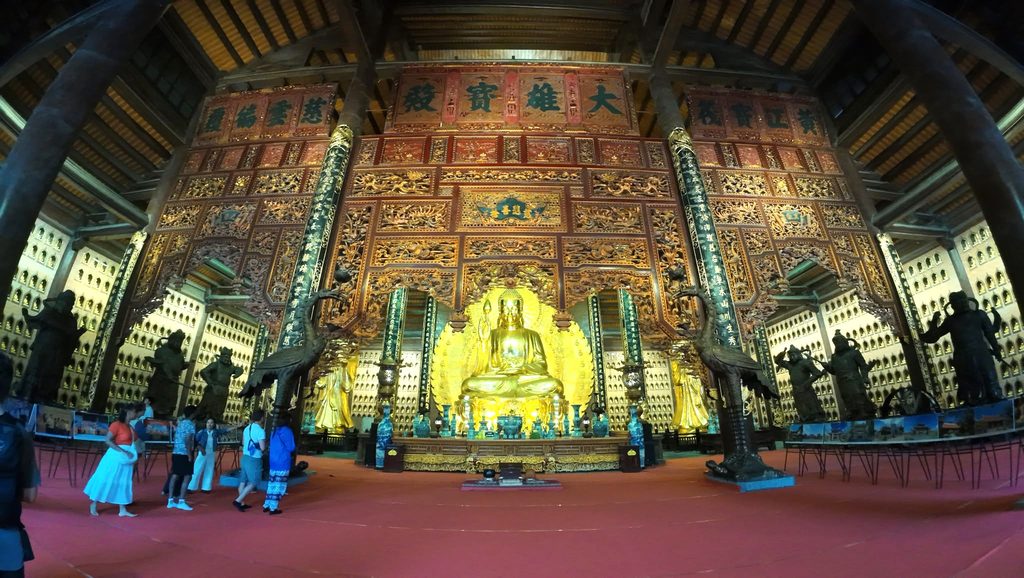
Phap Chu Hall houses a huge bronze statue of Shakyamuni Buddha.
The statue is about 10 metres high and weighs around 100 tonnes. It is one of the most impressive examples of the monumental scale used throughout the modern Bai Dinh complex.
Tam The Hall
Tam The Hall is one of the largest buildings in the complex.
Inside are three large Buddha statues representing the past, present and future. The hall is located at a higher point, so reaching it involves additional walking and stairs.
Bao Thap
Bao Thap is the tall stupa rising above the surrounding complex.
If you are comfortable with stairs, going up can provide a different perspective over the temple grounds and surrounding landscape.
The Ancient Bai Dinh Pagoda
Do not assume that the giant modern buildings are the entire story.
The ancient Bai Dinh Pagoda is located on Bai Dinh Mountain, near the modern complex. This section contains caves and older religious sites and offers a different atmosphere from the monumental new complex.
If you are interested in the historical and spiritual side of Bai Dinh, this is the part I would not skip.
Ngoc Well
Ngoc Well, or Jade Well, is another feature associated with the ancient Bai Dinh area.
According to local tradition, the well was associated with the Buddhist monk Nguyen Minh Khong, who is said to have used its water for medicinal purposes. The well is approximately 30 metres in diameter and 6 metres deep.
Before You Visit
Expect a lot of walking
Bai Dinh is much larger than a typical Vietnamese pagoda.
Even if you use an electric shuttle, you should still expect to walk between the main sights. Comfortable shoes are strongly recommended.
Dress appropriately
Bai Dinh is an active Buddhist religious site, not simply a tourist attraction.
Wear clothing that covers your shoulders and knees when entering worship areas. Avoid treating the temple halls like ordinary photo locations.
Start early if possible
The complex can become busy, particularly during Vietnamese festivals and religious holidays.
An early start also helps you avoid some of the strongest heat of the day, which can make a significant difference when walking around the complex.
Check current transport and ticket arrangements
The access system, electric-cart arrangements and additional fees can change, so check the latest information before your visit rather than relying on an old travel blog.
In particular, check whether your ticket or tour already includes electric-cart transportation and whether access to attractions such as the stupa is included.
Bring water
The complex is large and you may spend several hours there.
Bring drinking water, especially during the hotter months.
Allow enough time
A rushed one-hour visit is unlikely to give you a good impression of Bai Dinh.
For a more complete visit, allow several hours, particularly if you want to see both the modern complex and the ancient pagoda.
Respect the religious environment
You will see people praying, burning incense and making religious offerings.
Photography is generally part of the visitor experience, but be respectful around people who are worshipping. Follow any signs restricting photography inside particular areas.
A Guide’s Personal Experience.
If it is raining, you should buy a raincoat beforehand.
I once visited Bai Dinh Pagoda with my guests, a group of 12 people, in bad weather with heavy rain. Nobody had a raincoat, and the nearest shop was too far away.
There are some areas without a roof, so we had to walk in the rain while visiting the complex. As a result, everyone got completely wet.
Mobile Data & eSIM
Having mobile data is useful when visiting Bai Dinh, particularly if you are travelling independently.
The complex is very large, so you may want to use Google Maps to check your location, contact your driver, look up your next destination or translate Vietnamese signs.
If you are travelling around Vietnam for several days, an eSIM can be a convenient alternative to buying a physical SIM card after arrival. You can install it before your trip and activate your mobile data when you need it.
For a Ninh Binh day trip, mobile data is particularly useful for:
- navigating between Bai Dinh, Trang An, Hoa Lu and your hotel
- contacting your driver
- checking transport information
- using translation apps
- booking or checking travel services online
- staying connected while travelling outside Hanoi
If you plan to use an eSIM, check that your phone is unlocked and compatible with eSIM before purchasing one.
Conclusion
Bai Dinh Pagoda is not the kind of destination you visit simply to see one beautiful temple.
Its appeal comes from the combination of monumental Buddhist architecture, hundreds of statues, mountain scenery and the contrast between the modern complex and the ancient pagoda.
For first-time visitors to Ninh Binh, Bai Dinh is worth considering if you are interested in Vietnamese Buddhist culture and large architectural sites. Just plan for the size of the complex and the amount of walking involved.
If you have enough time, visiting Bai Dinh together with Trang An or Hoa Lu can make a practical full-day Ninh Binh itinerary.
The most important thing is to understand what you are visiting: the modern complex shows you the impressive scale of Bai Dinh, while the ancient pagoda gives you a better connection to its older religious history.