
Duong Lam Ancient Village: A Practical Guide for First-Time Visitors
If you want to see a quieter side of Vietnam beyond Hanoi’s busy Old Quarter, Duong Lam Ancient Village is worth considering for a day trip.
Located about 40–50 km west of central Hanoi, Duong Lam is a group of traditional villages where visitors can still see old houses, narrow lanes, village gates, communal spaces, temples and everyday rural life. The village is particularly known for its traditional laterite architecture and its connection with the history and culture of northern Vietnam.
Unlike a conventional museum, Duong Lam is a living community. Local people still live and work here, so the experience is more about walking through the village and observing the surroundings than simply visiting individual monuments.
For first-time visitors to Vietnam, Duong Lam can be a good choice if you have already explored the main attractions in Hanoi and want to experience a more rural environment.
Overview
Duong Lam is best experienced slowly.
The historic area includes several villages, with Mong Phu being one of the most interesting areas for visitors. The official village website highlights places such as the Mong Phu Village Gate, Mong Phu Communal House, ancient wells, Mia Pagoda, the temples of Phung Hung and Ngo Quyen, and several traditional houses.
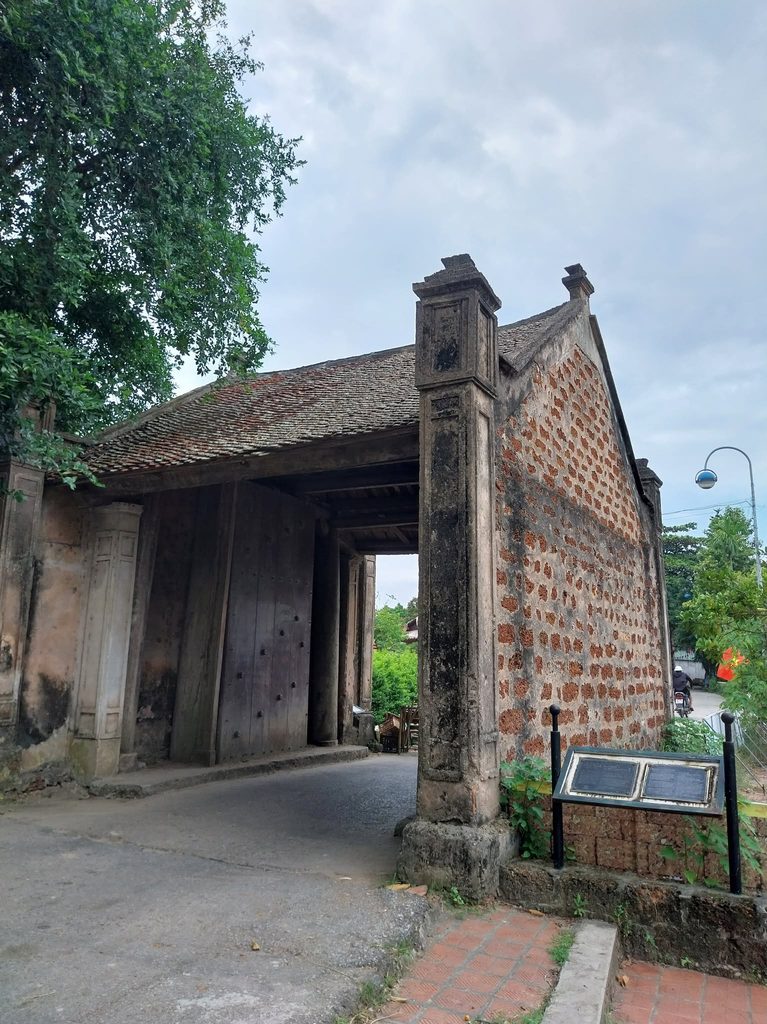
One of the main attractions is the traditional architecture. Many old houses were built using laterite, a reddish-brown local material that gives the village a distinctive appearance.
The village is also associated with two Vietnamese historical figures, Phung Hung and Ngo Quyen, which is why Duong Lam is sometimes called the “land of two kings.”
However, you do not need to be a history enthusiast to enjoy the village. The biggest attraction is simply walking through the quiet lanes, looking at traditional houses, village architecture and the surrounding countryside.
Is Duong Lam worth visiting?
Yes, if you want:
- Traditional northern Vietnamese village architecture
- A quieter experience outside central Hanoi
- A walking-focused cultural experience
- Rural scenery and narrow village lanes
- A contrast with Hanoi’s modern urban environment
It may not be for you if:
- You only have one day in Hanoi
- You prefer large museums and major monuments
- You expect a highly developed tourist attraction
- You dislike walking in hot or humid weather
For most independent travelers, around 3 hours at the village is enough for a comfortable visit, although you can stay longer if you want to explore more slowly.
How to Get There
From Hanoi by private car or taxi
For most international visitors, a private car is the easiest option.
The journey from central Hanoi generally takes around 1–1.5 hours, depending on traffic. A private vehicle also gives you more flexibility if you want to combine Duong Lam with other attractions around Son Tay.
This is particularly practical for couples, families or small groups.
By public bus
Public transportation is possible, but it requires more planning.
Several bus routes connect Hanoi with Son Tay, including routes such as 70, 71 and 77. From Son Tay, you normally need to continue by taxi or motorbike taxi to reach the ancient village.
This is cheaper than taking a private car, but it takes longer and is less convenient for first-time visitors who do not speak Vietnamese.
By motorbike
Experienced riders can travel to Duong Lam by motorbike.
One common route is via Thang Long Avenue, continuing towards Hoa Lac and then National Road 21 before following signs towards Duong Lam. Another option is to travel along National Road 32 towards Son Tay.
If you choose this option, allow extra time and be careful with traffic, particularly when leaving Hanoi.
Getting around the village
Once you arrive, walking is one of the best ways to explore Duong Lam.
The narrow lanes make walking more enjoyable than trying to move between every attraction by vehicle. Bicycles are another option, while the village also has electric sightseeing vehicles for visitors who prefer not to walk as much. The official site currently lists electric-vehicle sightseeing services.
What to See
Mong Phu Village Gate
The traditional village gate is a natural starting point for exploring Duong Lam.
It provides an immediate change of atmosphere from the roads outside the village. From here, you can continue on foot through the smaller lanes.
Mong Phu Communal House
The communal house is one of the important traditional buildings in the village.
It represents the communal and cultural life of a traditional northern Vietnamese village. Take some time to look at the architecture rather than simply stopping for a quick photograph.
Traditional Ancient Houses

The old houses are probably the most interesting part of Duong Lam for many international visitors.
Several traditional houses are open to visitors, and the village’s official website lists houses such as the homes of Mr. Hung, Mr. The and Mrs. Lan.
These houses give you an opportunity to see how traditional rural homes were organized and how families lived in the past.
Remember that these are not simply museum exhibits. Some houses are still connected with local families, so behave respectfully when entering.
Mia Pagoda
Mia Pagoda is another important cultural site associated with the Duong Lam area.
If you are interested in Vietnamese Buddhist architecture and traditional religious spaces, it is worth including in your itinerary.
Phung Hung Temple
Phung Hung was an important historical figure in Vietnamese history, and the village has a temple dedicated to him.
The temple provides a useful connection between the physical village and the history of the region.
Ngo Quyen Temple and Mausoleum
Ngo Quyen is another major historical figure associated with Duong Lam.
The temple and mausoleum are located in the wider Duong Lam area and can be included if you have enough time.
The Village Lanes and Countryside
Do not spend the entire visit moving from one monument to another.
Some of the best parts of Duong Lam are the ordinary lanes between the attractions. Walk slowly, look at the old walls and houses, and pay attention to how the village connects traditional architecture with everyday life.
That is one of the main differences between visiting Duong Lam and visiting a conventional historical site.
Before You Visit
Allow enough time
Duong Lam is not particularly difficult to visit, but travelling from Hanoi takes time.
For a comfortable day trip, leave Hanoi in the morning and avoid trying to squeeze the village into a very short schedule.
Wear comfortable shoes
You will probably spend a significant part of your visit walking.
Comfortable shoes are more useful than fashionable footwear, especially if you want to explore the smaller lanes.
Bring sun protection
Northern Vietnam can be hot and humid, particularly during the warmer months.
Bring:
- Drinking water
- Sunscreen
- A hat
- Sunglasses
- Comfortable walking shoes
Respect local residents
Duong Lam is a living village, not an open-air museum without residents.
Avoid entering private areas without permission, keep noise levels reasonable and ask before taking close-up photographs of local people.
Bring some Vietnamese cash
Small local businesses may not always accept international cards.
Having some Vietnamese dong with you is useful for food, drinks, local services and transportation.
Check current information before travelling
Opening arrangements, local services and transportation can change.
The official Duong Lam website provides current contact information and local services, including sightseeing vehicles and food services.
A Guide’s Personal Experience.
Once, on my way to Mong Phu Communal House, I met an elderly woman. She smiled at me, and I noticed that she had black teeth.
Blackened teeth were once a traditional custom among Vietnamese people, especially among older generations. Although the practice has mostly disappeared today, you can still occasionally meet elderly people who have kept this tradition.
Mobile Data & eSIM
If you are visiting Duong Lam independently, having mobile data is especially useful.
You may need internet access for:
- Navigation
- Checking directions
- Translating Vietnamese
- Calling a taxi
- Finding your way back to Hanoi
- Checking transport information
- Using online maps while walking around the village
Because Duong Lam is outside central Hanoi, it is better not to depend entirely on hotel Wi-Fi.
For international visitors staying in Vietnam for several days, an eSIM can be a convenient option because you can arrange your mobile data before leaving home and avoid searching for a SIM shop after arrival.
Before choosing an eSIM, compare the coverage, data allowance, validity period and price. For a short Vietnam trip, a smaller data package may be enough if you mainly use maps, messaging and occasional translation.
Conclusion
Duong Lam Ancient Village is not the kind of destination you visit for spectacular monuments or a packed sightseeing schedule.
Its appeal is quieter.
It gives visitors an opportunity to walk through a traditional northern Vietnamese village, see old houses and religious buildings, and observe a rural environment that feels very different from central Hanoi.
If you have enough time for a day trip outside Hanoi and are interested in Vietnamese culture, traditional architecture and slower travel, Duong Lam is a worthwhile addition to your itinerary.
For the best experience, do not rush from one attraction to another. Walk, look around and give yourself time to experience the village as a living community rather than simply another tourist attraction.